


The 6 Practices is a 6-part email series over two weeks that teach the 6 practices business leaders can use to capture and leverage the know-how that lives inside their business, so they can grow their team through Intentional Integration, not Accidental Osmosis.
The 6 Practices of
Successful Knowledge Transfer
From Accidental Osmosis to Intentional Integration
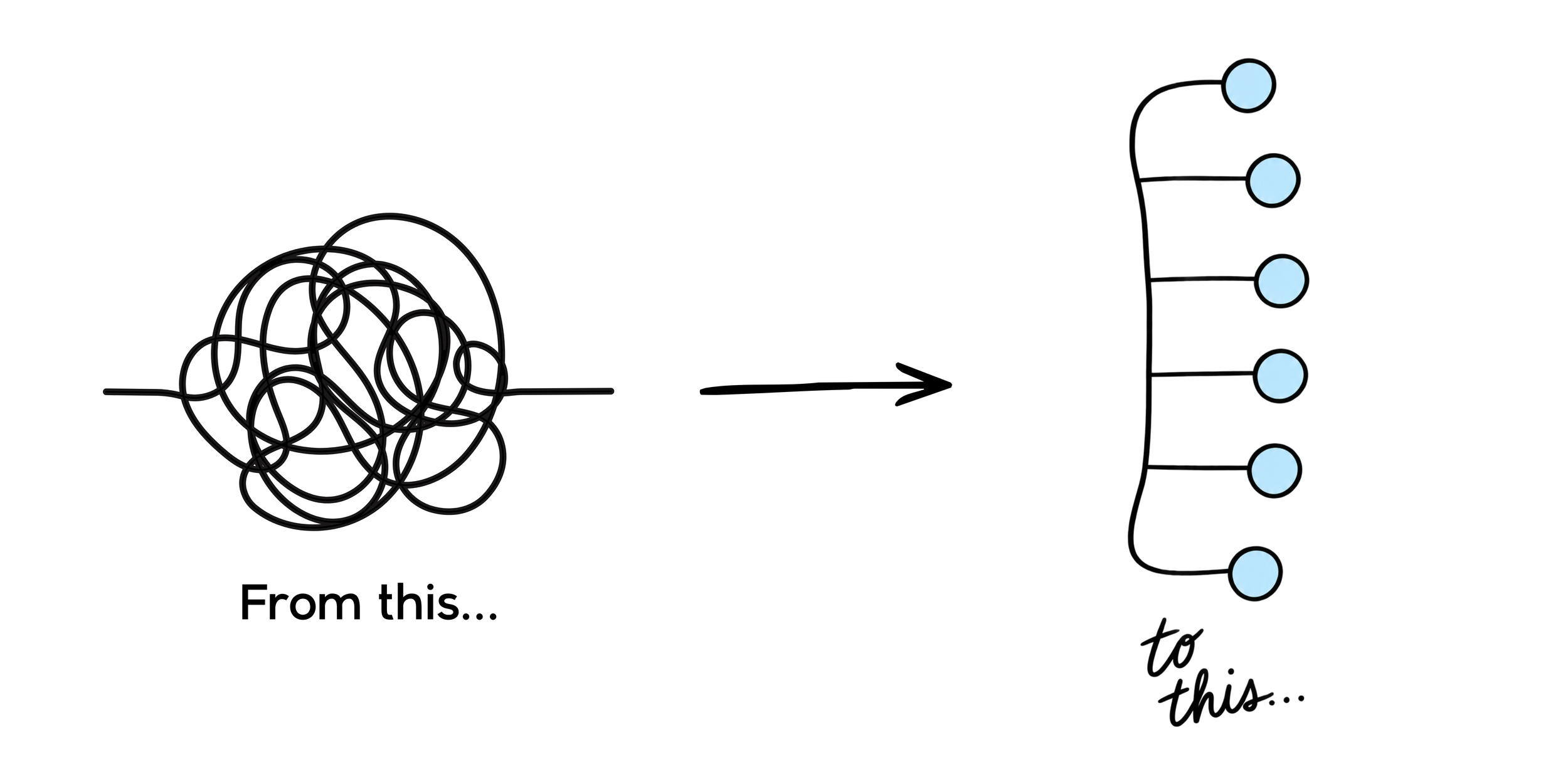
How do some entrepreneurs protect the soul of their business as they grow a team, while others resign themselves to devolving into chaos or just staying small?
It happens through a cycle of capturing the know-how and judgment calls of your best people, then transferring it to everyone else. It happens through Intentional Integration, not Accidental Osmosis.
More on the 6 Practices
A past client in the luxury home market hired me before expanding into a new city. The problem they wanted to solve was:
“How do we replicate the business we’ve built here, in another city?”
For them, it started with getting the right person in business development. So I asked their lead sales guy to walk me through his process.
He went over all the basics—build rapport, ask good questions, make intentional recommendations. About 90% of every company’s sales process is the same as any other.
But he got to a particular step and paused. He thought for a moment then said:
“I don’t know. Then I just read the room. You can’t really teach that.”
I’ve heard some version of this sentence in almost every company I’ve ever worked with.
You can’t teach this
It’s just intuition
Some people have it and some people don’t
And after working with 100+ SMBs to build scalable processes, team training, and change communication, I can confidently say: it’s simply not true.
The stuff your best people “just know” — the instincts, the judgment, the read on a situation — didn’t come from nowhere. It came from reps, from trial and error, from pattern recognition built over time. It came from experience.
Define the pattern, and it can indeed be taught to others who have the skills, desire, and capacity to learn it.
When the patterns live in a single person, you have an Indispensable Expert.
But when the patterns are detached from a single person, when they live in your company instead, you have a scalable business.

Indispensable Experts rely on the instincts, intuition, and experience they’ve gained over years or decades to make decisions. They can’t really articulate how they do what they do…they just do it. They are also their company’s central decision-maker and central point of failure.
The Indispensable Expert must become an
Expertise Multiplier, consistently producing apprentices trained in their craft.
Most companies I work with have an Indispensable Expert problem not because the knowledge couldn’t have been transferred, but because nobody ever tried.
The cost of that isn’t always visible on a P&L. But it shows up in
more time spent integrating new hires (or failing to do it at all)
chaos every time something changes
an inability to ever sell or transfer the company to someone else
And it matters more than it used to. In the 1950s, somewhere around 20% of U.S. workers were knowledge workers. Today it's more like 60%. Fewer of us are producing widgets, more of us are trading in what we know, instead.
Which means the thing business owners need to delegate isn't just a set of tasks—increasingly, it's our thinking.
In the 21st century, transferring the know-how that lives in our company is the real work of building a scalable, sustainable business that’s worth something with or without you.

The 6 Practices
Six practices to help you multiply your expertise
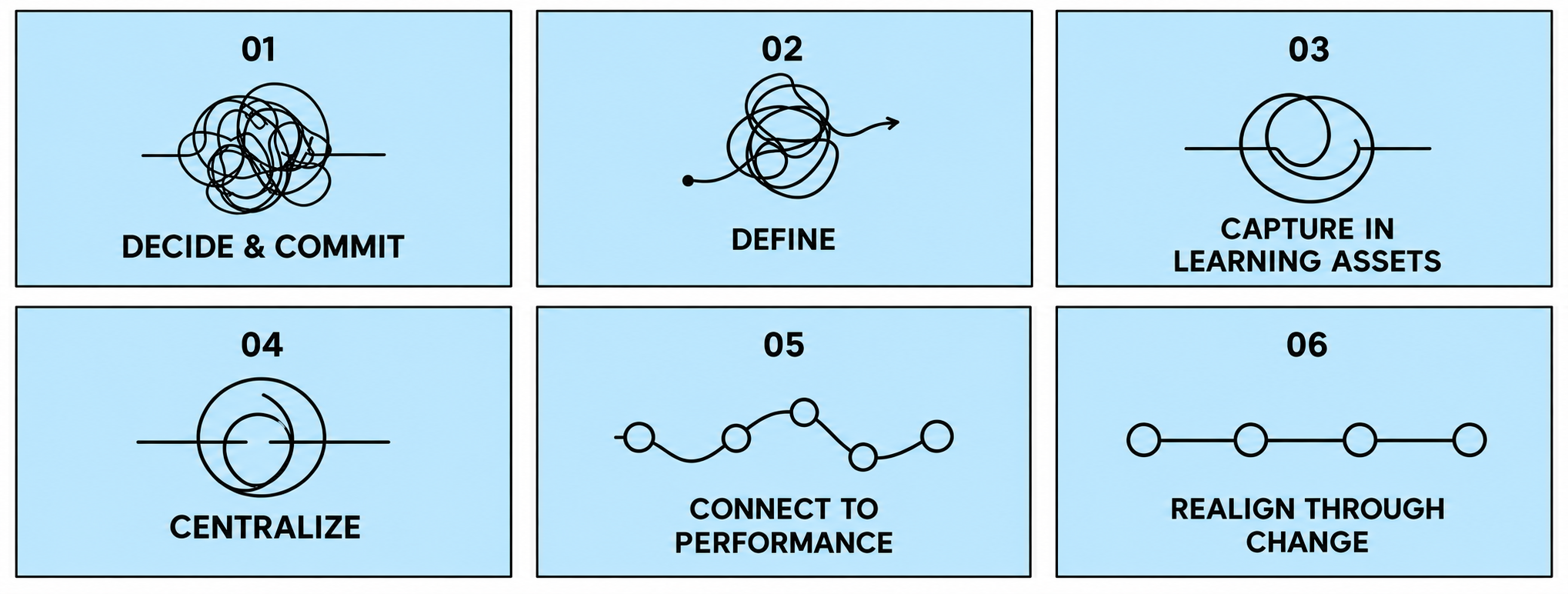
Over the next six emails, I'll walk you through The 6 Practices that make it happen. I’ve arrived at these six by putting in those 100+ reps of my own, seeing the same issues and opportunities pop up over and over again, across industries, team size, and geography.
It’s important to note that the work of knowledge transfer is not a project, it’s a cycle you enter and maintain until the final transfer of your company to another owner. That’s why I’ve chosen the word “practices” instead of something like “steps.”
The first few practices are about getting the knowledge out, externalizing it and making it more tangible.
The last few show you how to help the learner internalize it so it sticks. To actually do something with that knowledge, turning it into real business value.
That sales guy was right about one thing: you can’t teach what you’ve never taken the time to examine yourself. So that’s where we’ll start.
Festina lente,
Elizabeth